
Sciatica: What It Is, What It Isn't, and Why Rest Is Rarely the Answer

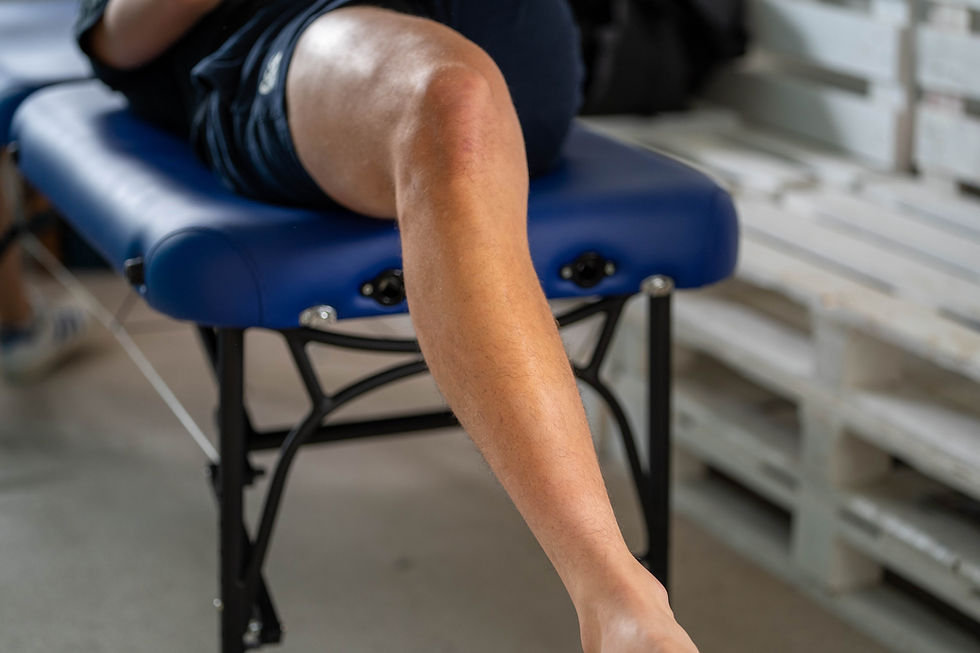
The shooting pain down the back of your leg. The pins and needles in your foot. The deep ache in your buttock that makes sitting unbearable. If you have experienced any of these, you may have been told you have sciatica — and then told to rest and wait.
For most people, that advice is incomplete. Here is what sciatica actually is, how it is properly assessed, and what the evidence says about getting it resolved.
What Sciatica Actually Means
Sciatica is not a diagnosis. It is a description of symptoms: pain, tingling, numbness, or weakness that travels along the path of the sciatic nerve, typically from the lower back or buttock through the back of the thigh and into the lower leg or foot.
The nerve irritation driving those symptoms can come from several different sources. A disc bulge in the lumbar spine — the most commonly cited cause — is one of them. But the sciatic nerve can also be compressed or irritated at the piriformis muscle deep in the buttock, at the sacroiliac joint, or at other points along its path. Referred pain from lumbar joints and muscles can mimic sciatic pain closely enough to be indistinguishable without a proper assessment.
This matters for one reason: the treatment depends on the driver. A disc-related presentation and a piriformis-related presentation are managed differently. Treating the wrong one does not resolve the problem.
Why It Is Often Mismanaged
Two patterns come up repeatedly in people who've been dealing with sciatica for months without improvement.
The first is pure rest. Resting acutely — in the first few days of a severe flare — is appropriate. The nervous system is sensitised, movement is painful, and settling the immediate flare down is a reasonable first step. But prolonged rest beyond the acute phase does not resolve nerve irritation. It often worsens it: the structures supporting the lumbar spine — muscles, deep stabilisers, the joints themselves — begin to lose conditioning, and the sensitivity of the nervous system does not reduce without a graded return to movement.
The second is treatment without diagnosis. Massage, ultrasound, and generic "back exercises" can all be useful tools. Used without identifying the driver of the nerve irritation, they address symptoms rather than the cause — which is why people often feel temporarily better and then worse again.
Assessment First: Finding the Driver
At Light Blue Clinic, every patient with suspected sciatica is assessed thoroughly before treatment begins. That assessment covers:
A detailed history of how the symptoms started, what aggravates and relieves them, and how they have changed over time
Neurological testing to assess nerve root function — reflexes, sensation, and muscle strength in the leg
Movement assessment of the lumbar spine, pelvis, and hip
Orthopaedic tests to differentiate the likely source of nerve irritation
Posture and loading pattern assessment where relevant
The goal is to establish where the nerve irritation is coming from and what is maintaining it — not to label it "sciatica" and apply a standard protocol.
Physiotherapy and Osteopathy for Sciatica
Depending on the presentation, the treatment routes at Light Blue Clinic are physiotherapy with Ellie Lewis or osteopathy with Milosz Wrobel.
Physiotherapy focuses on rehabilitation: graduated movement and loading to restore nerve mobility and lumbar function, specific exercise to address the strength and stability factors contributing to the nerve irritation, and a structured return to full activity. Ellie has a particular focus on rehabilitation after injury, persistent pain management, and complex cases.
Osteopathy addresses the musculoskeletal drivers of nerve irritation through manual therapy, joint mobilisation, and movement rehabilitation — with a focus on identifying the root cause rather than managing symptoms in isolation. Milosz works with a wide range of musculoskeletal presentations and has experience with complex and persistent cases across a range of patient types, from desk workers to high-performance athletes.
In many cases, the most effective approach combines elements of both. The practitioners at Light Blue Clinic work as a team — if the initial assessment suggests a different route is appropriate, we will tell you.
Does Sciatica Need a Scan?
Imaging is not always necessary and is often not the right first step. An MRI can be useful for:
Confirming significant disc involvement where surgery is being considered
Ruling out serious pathology (see red flags below)
Guiding management in complex or non-resolving cases
For the majority of people with sciatica — including disc-related presentations — a clinical assessment and a structured rehabilitation programme is the appropriate starting point. Most lumbar disc bulges that cause sciatica resolve with conservative management. Imaging that shows a disc bulge does not automatically mean surgery is needed, and an MRI finding in isolation does not tell you whether that disc bulge is the actual source of your symptoms.
If imaging is needed, we will tell you and refer appropriately.
Red Flags: When to Seek Urgent Medical Attention
The following symptoms alongside back or leg pain require urgent medical assessment and should not wait for a physiotherapy or osteopathy appointment:
Loss of bladder or bowel control
Numbness or tingling in the inner thighs and perineal area (saddle anaesthesia)
Progressive weakness in both legs
Sciatica following a significant trauma
These are uncommon, but they are signs of potential serious spinal pathology. If you are experiencing any of them, attend A&E or contact your GP urgently.
What Recovery Looks Like
For the majority of patients, sciatica with a clear mechanical driver responds well to a structured clinical programme. The timeline varies — a mild presentation may resolve in six to eight weeks; a more established or disc-related case may take longer. What matters is that the programme is targeted, progressive, and adjusted as symptoms change.
We are direct about what to expect. If the presentation suggests that conservative management is unlikely to be sufficient, we will say so and refer appropriately. Our aim is to get you moving well again — whether that takes six weeks or whether it requires a pathway that involves other specialists.
Book In
No GP referral is needed. Book directly at lightblue.clinic/book-online.
If you have had leg pain, back pain, or sciatic symptoms for more than a few weeks, a clinical assessment will give you a clear picture of what is driving them and a realistic plan to address it.
This article is written as general educational guidance. It is not a substitute for an individual clinical assessment. If you are experiencing red flag symptoms as described above, seek urgent medical attention.


Comments